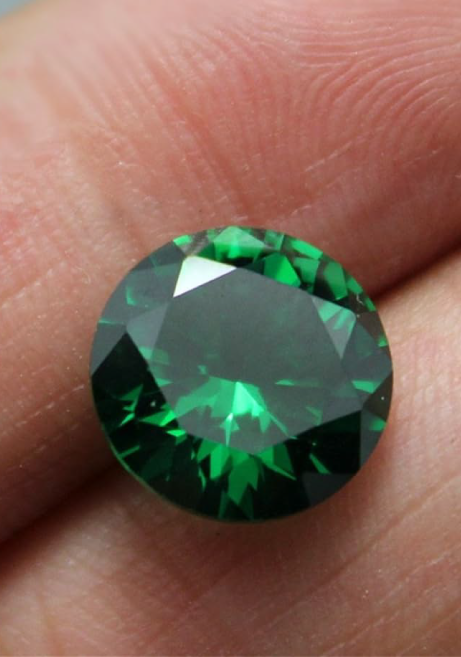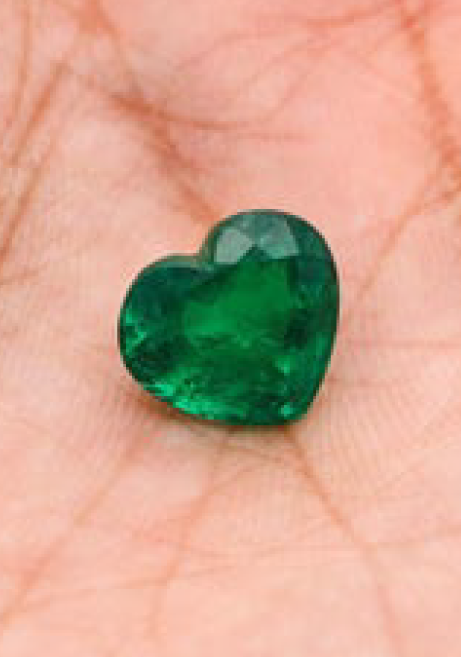
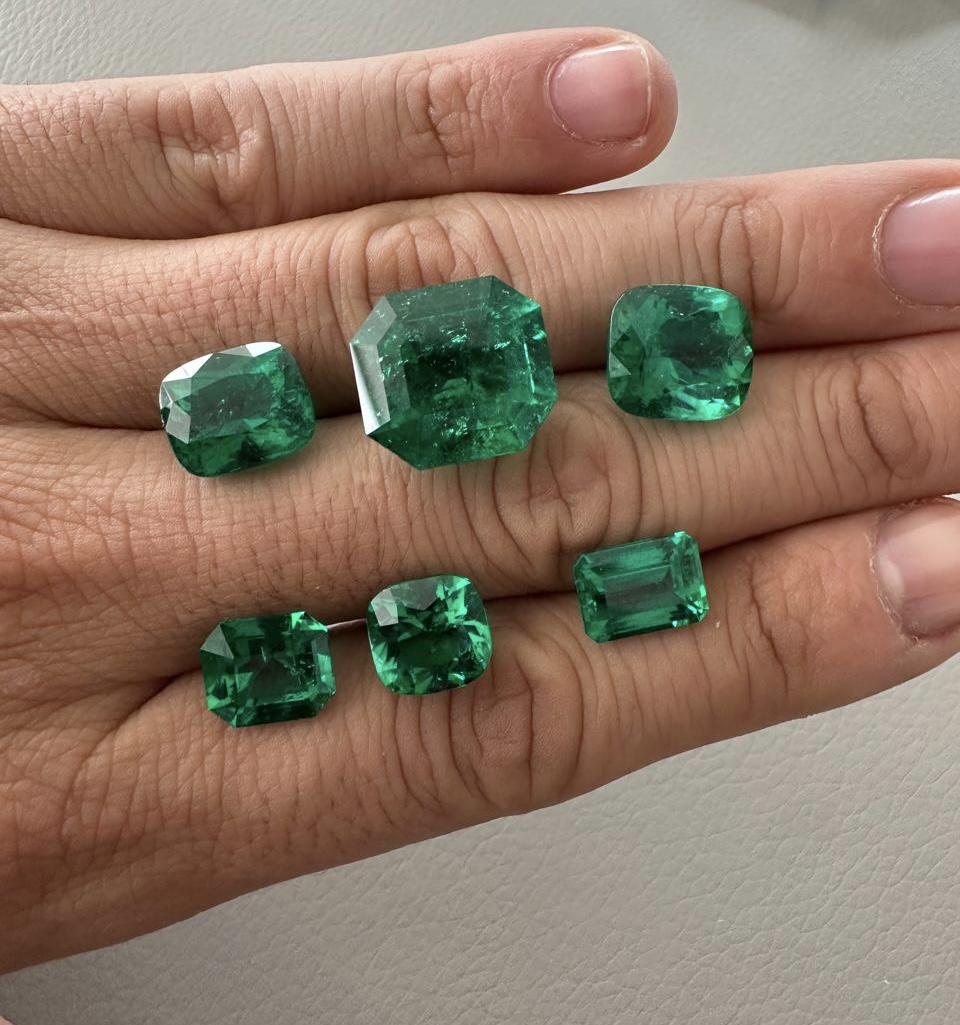
Colombian emeralds are regarded as the finest in the world, not by marketing tradition but by geology, rarity, and history.
To know their true value, it’s essential to look beyond size alone and consider the characteristics that define a truly exceptional emerald.
Colour: The Essence of an Emerald
Colour is the most important characteristic of any emerald and the primary reason Colombian stones are so highly prized.

HUE
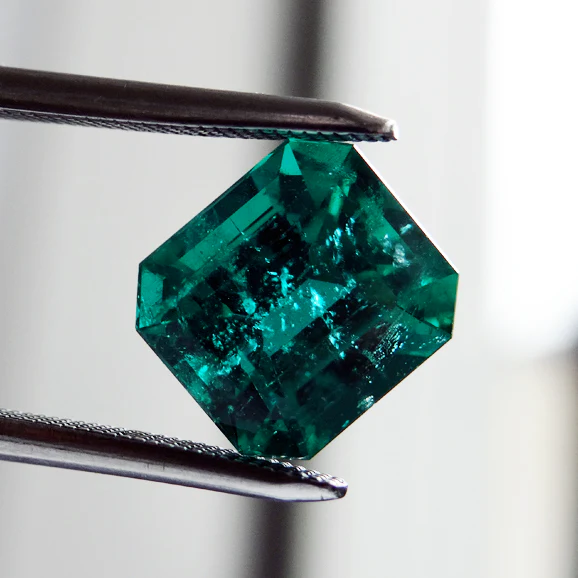
All emeralds are green, but the finest examples display a pure, balanced green with subtle blue undertones rather than yellow. Emeralds from the Muzo region are renowned for this distinctive hue, which gives the stone depth, elegance, and a natural vibrancy that cannot be replicated elsewhere.
SATURATION
Saturation refers to the strength and purity of the colour. High-quality Colombian emeralds exhibit vivid, lively saturation without appearing harsh or artificial. This richness is the result of rare geological conditions and trace elements such as chromium and vanadium present during formation.

TONE
Tone describes how light or dark the emerald appears. The most desirable stones fall within a medium to medium-dark range, allowing the colour to remain strong while preserving transparency. Colombian emeralds are particularly valued for achieving this balance naturally.
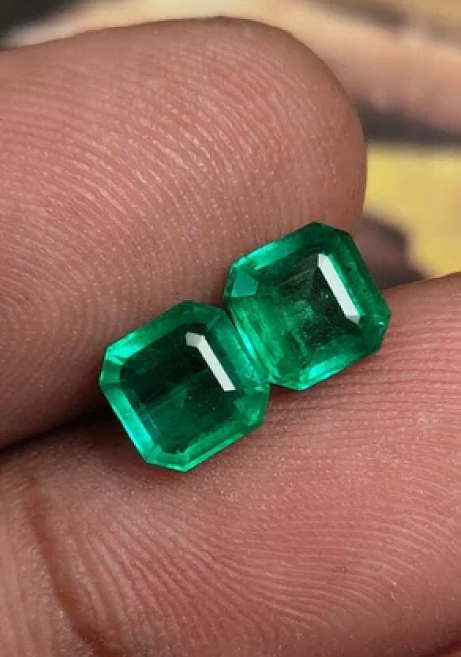
Clarity: Nature’s Fingerprint
Emeralds are classified as Type III gemstones, meaning inclusions are expected and entirely natural. Nearly all emeralds contain internal features formed during their growth deep within the earth.
Often referred to as jardins — French for “gardens” — these inclusions are not flaws, but part of an emerald’s identity.
They serve as a reminder that the stone is natural and untreated beyond accepted industry practices.
Unlike diamonds, emeralds are not judged by strict clarity standards. Instead, value is determined by how inclusions affect:
- Transparency
- Structural integrity
- Overall visual appeal
Emeralds that appear clean to the naked eye are exceptionally rare and command significant premiums, particularly when combined with strong colour.
Cut: Craftsmanship Over Symmetry
Cutting an emerald is as much an art as it is a technical discipline. Unlike diamonds, which prioritise symmetry and brilliance, emeralds are cut to maximise colour, preserve weight, and respect the natural crystal.
The classic emerald cut was developed specifically for this gemstone. Its step-cut facets:
- Enhance colour distribution
- Reduce internal stress
- Protect vulnerable corners
However, emeralds may also be cut into oval, cushion, pear or round shapes, depending on the characteristics of the rough stone.
At our headquarters in Colombia, each emerald is cut by one of more than fifteen specialised cutters. With continuous production from our own mines, new rough stones are regularly assessed, shaped, and finished to exacting standards, ensuring consistency and exceptional quality.


Carat: Size in Perspective
Carat weight measures an emerald’s size, but it should never be considered in isolation.
While larger emeralds are rarer, colour and clarity always take precedence. A smaller stone with exceptional colour and transparency will often be more valuable than a larger stone with weaker characteristics.
High-quality Colombian emeralds above three or four carats are particularly rare, making size a meaningful factor only when the underlying quality is present.